Tag Archives: hormone balance

Why You Keep Waking Up Between 1–3 AM

If you’re a woman in your late 30s, 40s, or early 50s and you’ve started waking up in the middle of the night — often somewhere between 1 and 3 AM — you’re not alone.

Many women tell me the same thing:

“I fall asleep fine… but then I wake up at 2 or 3 AM and my mind turns on.”

Sometimes you can fall back asleep.
Sometimes you can’t.

And over time it becomes exhausting.

Most women assume this is just insomnia or something they have to live with as they get older.

Many women search for answers to questions like “why do I wake up at 3 AM every night?”

But in many cases, your body is actually trying to communicate something important.


Your Body Isn’t Random — It’s Rhythmic

Your body runs on rhythms.

Hormones follow rhythms.
Digestion follows rhythms.
Your nervous system follows rhythms.

When these rhythms are supported, sleep tends to be deep and restorative.

But when they are disrupted — often from stress, overstimulation, irregular routines, or hormone shifts — the body begins sending signals.

Middle-of-the-night waking is one of the most common signals.


Many women begin waking between 1–4 AM during their late 30s and 40s, especially during periods of stress or hormonal transition.


The Nervous System Connection

One of the biggest reasons women begin waking between 1–4 AM is nervous system overload.

Many women today are living with a nervous system that has been running in low-grade fight-or-flight mode for years.

Work demands.
Parenting.
Emotional load.
Constant stimulation from phones and screens.
Years of pushing through exhaustion.

I recorded a short video explaining why this happens and what your body may be trying to tell you:

When the nervous system is constantly on alert, the body produces more stress hormones like cortisol.

Cortisol is meant to rise gradually in the morning to help you wake up.

But when the nervous system is dysregulated, that rhythm can flip.

Instead of rising in the morning, cortisol can spike during the night, waking you up between 1–4 AM.


Hormones Also Play a Role

For many women, this pattern becomes even more noticeable during perimenopause.

One reason is that progesterone naturally begins to decline during this stage of life.

Progesterone is often called a “calming hormone.”
It helps regulate the nervous system and supports deeper sleep.

When progesterone drops and the nervous system is already under stress, sleep disruptions often follow.

This is why many women in their 40s suddenly begin experiencing sleep patterns that never used to happen before.


From a Seasonal Perspective

There is also something important happening right now if you’re reading this in late winter or early spring.

In seasonal living traditions like Ayurveda, winter is naturally a slower, heavier time.

The body tends to store more energy, move less, and turn inward.

But as spring approaches, the body begins to shift toward mobilization and detoxification.

If the nervous system is already overloaded, this seasonal shift can amplify symptoms such as:

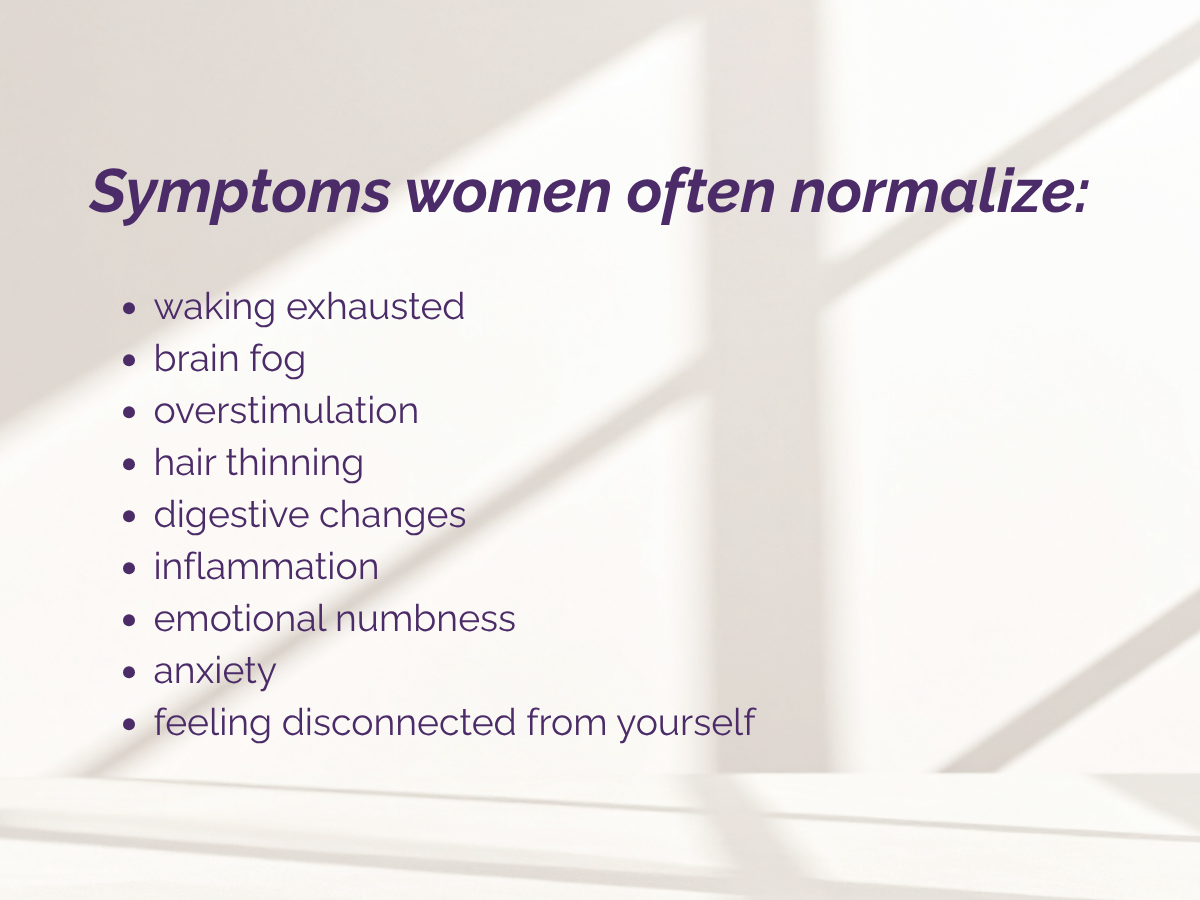
• waking during the night
• puffiness or inflammation
• irritability
• fatigue
• feeling “wired but tired”

Again, your body isn’t malfunctioning.

It’s adjusting.


A Few Simple Ways to Support Your Sleep

If you’re experiencing this pattern, small shifts can make a meaningful difference.

Here are a few gentle practices that help many women begin restoring their sleep rhythm:

Dim lights and reduce stimulation in the evening
Bright light and screens signal alertness to the brain.

Eat an earlier, lighter dinner
Heavy or late meals can disrupt nighttime hormone rhythms.

Avoid late-night snacking and sugar
Blood sugar swings can contribute to night waking.

Create a calming wind-down routine
Even simple rituals like herbal tea, stretching, or journaling can signal safety to the nervous system.

These changes may seem simple, but they significantly support the body’s natural rhythms and can have a dramatical effect on your ability to heal and recover over time.


The Bigger Picture

Sleep disturbances are rarely just about sleep.

They are often a reflection of the overall state of the nervous system and hormonal environment.

When women begin supporting these systems together — rather than chasing isolated symptoms — the body often responds surprisingly quickly.

Better sleep.
More stable energy.
Improved mood.
Less inflammation.

This is the deeper work of restoring rhythm.


If You Want Support Resetting Your System

Right now I’m opening a few private spots for

Spring Reset Sessions
Nervous System + Hormone Support for Women 35–55.

This is a 6–8 week private support container designed for women who are feeling:

• exhausted
• inflamed or puffy
• hormonally off
• stuck despite trying to do the “right things”

Inside the intensive we work on:

• nervous system regulation
• restoring healthy rhythms
• seasonal lifestyle adjustments
• gentle detox and hormone support

If you’d like to explore whether this work could support you, you can learn more or schedule a free 20–30 minute strategy call here:


Listening to Your Body’s Signals

If your body has been waking you up in the middle of the night, try not to see it as a failure or something broken.

Often it’s simply your body asking for a different kind of support.

And when you begin listening to those signals, powerful shifts can happen.

What Winter Was Trying to Teach Me…

Slowing down, listening inward, and supporting your inner fire

For years, the holidays brought up something I didn’t want to admit:

I wasn’t excited.
I was exhausted.

Everyone else talked about “magic” and “cozy family time,” and meanwhile I was running on fumes — overscheduled, underslept, and secretly bracing myself for the crash that always came afterward.

And I thought it was normal.
Part of being a mom.
Part of being a woman.
Part of “doing all the things.”

But here’s the truth I wish someone had told me:

My body wasn’t failing me.
I was failing my body.


The Year It All Fell Apart

There was one year I will never forget — not because it was special, but because it was the moment I realized something had to change.

I was:

  • staying up too late wrapping gifts
  • skipping meals
  • living on coffee
  • snapping at my kids
  • fighting the beginnings of a cold I didn’t have time for
  • and pretending everything was fine

And then Christmas morning came…
and I felt awful.

Foggy. Inflamed. Like I might cry at any moment.
I wasn’t able to enjoy any of it.

My kids felt it.
My body felt it.
My heart felt it.

And in that moment, I realized:
This isn’t what I want to model.
This isn’t the life I’m here to live.


The Missing Piece No One Talks About

When I finally found Ayurveda and seasonal living, everything clicked:

My exhaustion wasn’t a personal failure.
It was a seasonal mismatch.

Winter demands:

  • warmth
  • slowness
  • depth
  • nourishment
  • quiet
  • rhythm

…while modern holiday culture demands the opposite.

No wonder so many women struggle with:

  • anxiety
  • low energy
  • sugar cravings
  • poor sleep
  • bloating
  • inflammation
  • feeling “off” in their bodies

Winter affects:
digestion, hormones, immunity, mood, and the nervous system.

You’re not crazy.
You’re not “too sensitive.”
You’re seasonal — because you’re human.


What Finally Helped

Once I slowed down and aligned my habits with the season, everything shifted:

  • I stopped getting sick every winter
  • my digestion became stronger
  • my energy stabilized
  • my cravings eased
  • I became more patient, grounded, and present
  • holidays actually started to feel good again

And the biggest surprise?

Simple herbal remedies made a huge difference.
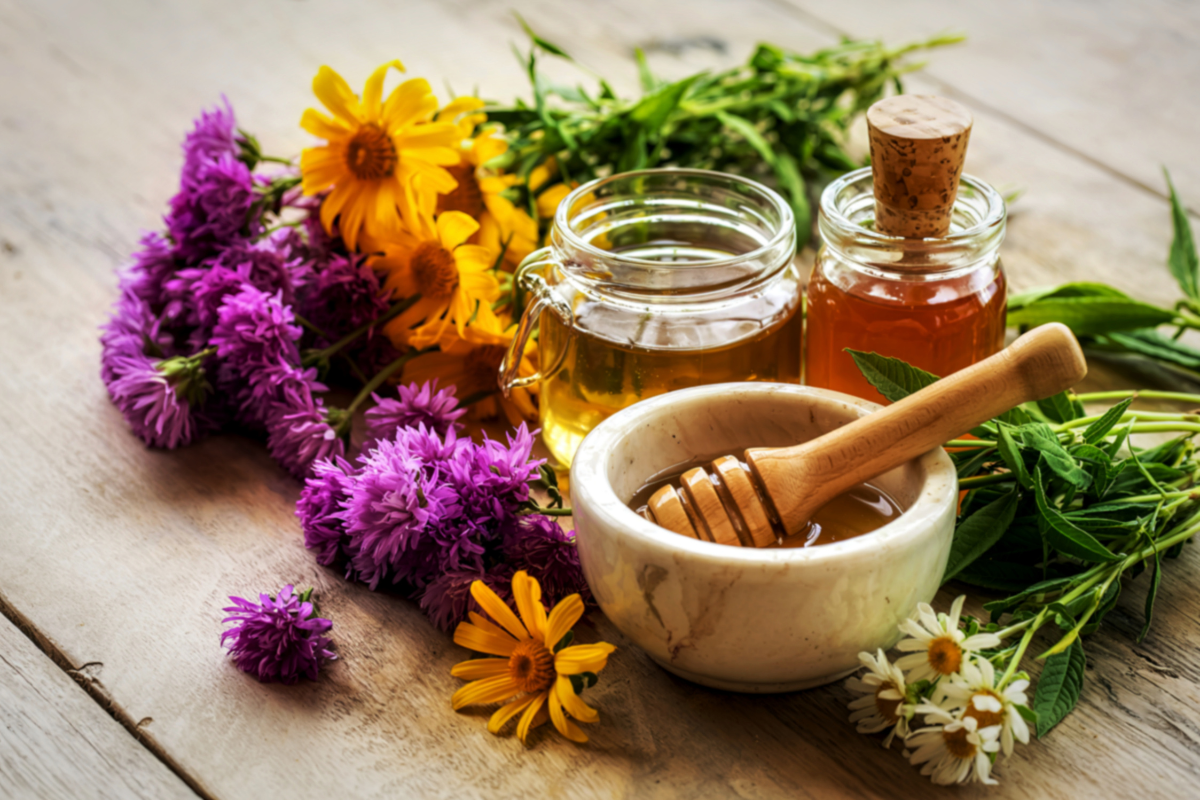
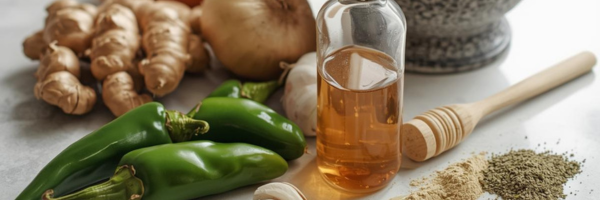
Fire cider. Ginger-honey remedies. Warm, spiced drinks.
Little daily rituals that stoked my inner fire.

None of it was complicated.
All of it was powerful.


If you want to experience this too…

Tomorrow, I’m teaching a live workshop called ROOTED: A Seasonal Medicine-Making Workshop — where you’ll learn the exact practices that helped me reclaim winter in a whole new way.

We’ll make:
🍯 Fire Cider
🔥 Golden Fire Honey
…and you’ll get a beautiful, printable winter workbook.

You’ll walk away with:

  • stronger digestion
  • better immunity
  • a calmer nervous system
  • clarity for the holiday season
  • simple rituals to stay grounded
  • remedies you can use all winter

Or — get even more support (for less)

If you want weekly wisdom, monthly sisterhood circles, seasonal workshops, and a full winter library of support, you can join my Sustainable Wisdom Patreon tier for $33/month.

You’ll get:
✨ Weekly Empowered Wisdom Drops
✨ Monthly Sacred Sisterhood Circles
✨ Access to ROOTED + future workshops
✨ Ayurvedic guidance
✨ Community support
✨ A replay library


However you join me… I hope this winter feels different.

Slower. Softer.
More intentional.
More present.

You deserve to feel nourished during the holidays — not depleted by them.

And I’d love to walk with you in that shift.

Why Winter Feels So Hard…

TL;DR:
You’re not tired because you’re weak — you’re tired because winter slows digestion, hormones, energy & immunity. Warmth + rhythm = everything.
(Scroll to the bottom for the link to join my seasonal medicine-making workshop.)

Why does winter feel so heavy for so many women?

Even if you eat well, “try to stay healthy,” and take care of yourself…
every winter, your body speaks.

Fatigue.
Cravings.
Lower immunity.
Mood swings.
Feeling inflamed, bloated, puffy, or “off.”

Nothing is wrong with you — winter changes everything.

You might notice it every year:

  • Your energy drops
  • Your hormones feel louder
  • Your motivation disappears
  • Your digestion slows
  • Your immune system feels sensitive
  • Your mood gets shorter
  • Your body image takes a hit
  • Everything feels heavier

And then the self-doubt creeps in…

“Why can’t I handle winter better?”
“Is this just aging?”
“Why do I feel so emotional?”
“Why do I get sick this time every year?”

It’s not you.
It’s winter.

Your body is seasonal.

In Ayurveda, winter is cold, heavy, slow, and damp.
Your physiology reflects that:

  • digestion slows
  • metabolism decreases
  • circulation cools
  • emotional sensitivity increases
  • hormones fluctuate
  • immunity shifts

This is not a problem — it’s wisdom.

But modern life demands the opposite

Winter asks for:

  • warmth
  • rest
  • nourishment
  • slowness
  • grounding
  • deep presence

Life demands:

  • late nights
  • overstimulation
  • sugar/alcohol
  • emotional labor
  • endless logistics
  • unrealistic holiday expectations

Of course you feel overwhelmed.
Of course your immunity dips.
Of course your body feels “off.”


Your winter body needs support, not pressure.

When you honor the season:

  • digestion strengthens
  • immunity rises
  • hormones stabilize
  • energy becomes steady
  • emotions soften
  • inflammation decreases
  • you feel grounded, present, and warm

Winter can either pull you into overwhelm…
or guide you into deeper nourishment.

When you support your inner fire — digestion, immunity, hormones, circulation — winter becomes easier.
Your energy rises.
Your mood stabilizes.
You stop catching every cold.
You feel grounded instead of overwhelmed.

And you don’t need 20 supplements or complicated protocols.
Just seasonal medicine.
Seasonal rhythm.
Seasonal nourishment.

This is what we’ll be doing together inside ROOTED.

Join me for ROOTED: Seasonal Medicine-Making Workshop

This Saturday at 2 PM EST • (Replay + Workbook included)

Together, we’ll make:

🔥 Fire Cider (digestion, immunity, circulation)
Golden Fire Honey (inflammation, mucus, hormones + sluggish winter energy)

You’ll also learn how to:

  • support winter digestion & metabolism
  • strengthen immunity naturally
  • work with seasonal rhythms instead of against them
  • protect your energy through the holidays
  • nourish your inner fire + emotional wellbeing

💫 Two Ways to Join:

Option 1 — ROOTED Workshop

$44 • One-time purchase

  • Live 2-hour workshop this Saturday
  • Fire Cider + Golden Fire Honey
  • Replay included
  • Printable workbook
  • Winter digestive + immune support
  • Cozy seasonal rituals

Option 2 — Sustainable Wisdom Membership

$33/month • Best value
Includes EVERYTHING in ROOTED, plus:

  • Weekly Empowered Wisdom Drops
  • Monthly Sacred Wisdom Circle
  • Replay library access
  • Seasonal living + herbal wisdom
  • Private community space
  • Discounts on resets + 1:1 work

If you want support all winter/year long — not just for one workshop — this is your space.

Meet Your Guide — Jessica Graham Robinson

Ayurvedic women’s wellness practitioner, herbalist, yoga therapist, and founder of Sacred Wisdom Wellness.

I help women reconnect to their bodies, balance their hormones naturally, live seasonally, and cultivate a rhythm of life that supports their energy, digestion, immunity, and emotional wellbeing — without hustle or overwhelm.
This winter season is a powerful invitation back into warmth, nourishment, and presence.
I’m honored to walk this path with you.

Perimenopause: A Sacred Rite of Passage We’re Meant to Embrace

We were never meant to fight our way through midlife with fear in our hearts and a handful of prescriptions in our purses.

Perimenopause is not a disease. It’s not the end of your beauty, your vitality, or your worth.
It is a sacred rite of passage — a threshold into a season of deeper wisdom, freedom, and self-possession.

Yet in our culture, we’ve been taught to see it as something to resist at all costs.


The Cultural Lie About Aging

We live in a world obsessed with youth — where “looking younger” is marketed as the ultimate achievement and where aging is something to hide, correct, or fix.

In this new movement of “women who don’t age,” we’re losing something essential: the honoring of the midlife years as a powerful, sacred transition.

Perimenopause — the years leading up to menopause — is not just a biological process. It’s a spiritual initiation. But the way our culture frames it, many women are going through this doorway kicking, screaming, and clinging desperately to a version of themselves that no longer exists.


Why Fighting Nature Hurts Us

The more we resist the natural shifts of this season, the more suffering we create for ourselves.
Instead of listening to the body and supporting it through gentle, aligned practices, we are encouraged to:

  • Medicate away symptoms with blanket solutions like HRT without addressing root causes
  • Augment our bodies to hold onto youth instead of allowing them to evolve
  • Overwork and overstimulate ourselves to match the pace we could keep in our 20s or 30s

The truth? These years are meant to be different. You’re not supposed to have the same energy, body rhythms, or needs you once had — and that’s a good thing.


Ayurveda’s Wisdom on Midlife

In Ayurveda, perimenopause marks the beginning of the Vata season of life — a time when the energy of air and space increases. This is a period for:

  • Reflection and integration of your life’s experiences
  • Simplifying and refining what truly matters
  • Turning inward for wisdom and spiritual connection
  • Releasing what no longer serves your body, mind, or soul

When approached with care, this transition can bring increased clarity, deeper intuition, and a freedom you didn’t have in earlier decades.


A Call to Embrace, Not Resist

Rather than trying to “fix” perimenopause, what if we honored it?
What if we moved through it willingly, with grace — supporting our bodies with nourishing foods, gentle movement, herbal allies, rest, and spiritual practices?

What if we showcased midlife as the glorious window of time it truly is — where beauty is defined by presence, vitality, and wisdom rather than wrinkle-free skin?

This is not a season to dread. It’s a season to step fully into this rite of passage.

If you’re ready to move through perimenopause with grace and vitality, let’s connect.
I offer a complimentary 20-minute Clarity Call where we’ll talk about your top health challenges and how an Ayurvedic approach can support you in this sacred season.
If we’re a good fit, I’ll share the ways we can work together for deeper support.


Want to learn more?

I created a 5-part video seriesYour Ultimate Guide to Perimenopause – that goes deeper into each stage of this transition and how to support your body through it. Click here to watch.